
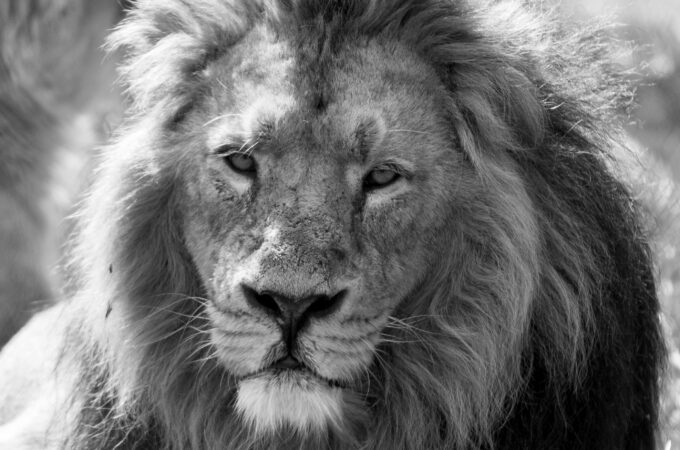
I wear a Star of David with the Lion of Judah at its center. For some, this combination invites confusion—is the wearer Jewish, Christian, or something else? The question is worth answering, because the symbol itself encodes a theological argument that runs from Genesis to Revelation, and that argument has urgent implications for how Christians understand their place in the world today.
The Star of David I wear is a confession of debt. Christianity is not merely influenced by Judaism—it is Jewish at its root. The Old Testament, comprising more than half of the Christian Bible, is written in Hebrew. The Messiah is a Jew. The young woman chosen to bear God incarnate was a Jew from Nazareth, in the provincial backwater of Roman Palestine. The monotheism and moral law that shaped Western civilization and informed the founding principles of nations like the United States trace their lineage directly to the covenant God made with Abraham and his descendants. To wear the Star of David is to refuse amnesia about this inheritance.
There is also a more immediate reason. The Jewish people have been hated, often precisely because they bore witness to a God who is moral and who demands righteousness—a witness that the world has always found inconvenient. The Holocaust was not an aberration of Western history but its nadir, the logical terminus of a long tradition of scapegoating that Western Christianity too often enabled or ignored. That antisemitism is resurgent today—on university campuses, in political movements both left and right, in the ambient cultural atmosphere—makes solidarity not a pious gesture but a moral obligation.
But the Lion of Judah at the center of the star is the heart of the matter. It is there because the symbol tells a story—a story the Bible takes from its first book to its last.
I. The Prophecy: Genesis 49
The patriarch Jacob is dying. He calls his twelve sons around him and speaks over each one words that carry the weight of prophecy—oracles that will shape the destinies of the tribes descending from them. When he comes to Judah, his fourth son, the words take on unusual gravity:
Judah is a lion’s cub; from the prey, my son, you have gone up. He stooped down; he crouched as a lion and as a lioness; who dares rouse him? The scepter shall not depart from Judah, nor the ruler’s staff from between his feet, until tribute comes to him; and to him shall be the obedience of the peoples. (Genesis 49:9–10, ESV)
This is a remarkable transfer of authority. Reuben held the birthright as the firstborn, but Jacob passes the mantle of leadership to Judah. The tribe of Judah will be the royal tribe—the one from which Israel’s kings will come. The lion imagery is deliberate: in the ancient Near East, the lion symbolized sovereignty, power, and the capacity to inspire fear in one’s enemies. A lion at rest is not weak; it is a lion that has nothing to fear.
The verse’s most provocative phrase is the word rendered “Shiloh” in older translations (Genesis 49:10, KJV) and “tribute” or “the one to whom it belongs” in more recent ones. The Hebrew is difficult, and the translation has been disputed for centuries. But early Jewish interpreters consistently understood it as a reference to the Messiah—the coming king who would fulfill everything Jacob’s blessing promised. The Targum Onkelos, an ancient Aramaic translation of the Torah, renders the phrase as “until the Messiah comes.”
This prophecy was fulfilled in a preliminary sense through David and Solomon, both from Judah’s line, who established Israel’s golden age. But the promise pointed beyond them. David’s kingdom ended; Solomon’s temple fell. The prophecy required a greater king.
II. The Fulfillment: Revelation 5
The book of Revelation is not easy reading, but its fifth chapter contains one of the most dramatically compressed theological moments in all of Scripture. The apostle John, caught up in a heavenly vision, sees a sealed scroll—representing God’s plan for governing creation and bringing history to its appointed end. An angel cries out: who is worthy to open the scroll? The silence is total. No one in heaven or on earth or under the earth can open it. John weeps.
Then one of the elders speaks:
“Weep no more; behold, the Lion of the tribe of Judah, the Root of David, has conquered, so that he can open the scroll and its seven seals.” (Revelation 5:5, ESV)
The elder’s words consciously echo Jacob’s deathbed prophecy. The Lion of the tribe of Judah is the Shiloh of Genesis—the one to whom the scepter belongs, who has now arrived and conquered. But when John turns to look, he sees not a lion but a lamb, standing as though slain (Revelation 5:6). This is the central paradox of Christian theology: the Lion conquers by becoming the Lamb; the king exercises his sovereignty by laying down his life.
The title “Root of David” is equally significant. It is both more and less than it appears. As root, Christ is prior to David—the divine source from which David’s line draws its life. As the one who grows from that root, He is David’s descendant in the flesh. The title thus compresses into a few words the doctrine of the Incarnation: one person who is at once before all things and born of a Jewish woman in a particular moment of history. He is the God-Man, the only mediator capable of standing between a holy God and a fractured humanity.
His worthiness to open the scroll—to govern creation and bring history to its end—derives from this conquest: His victory over sin, death, and the powers of darkness through crucifixion, resurrection, and ascension. The scroll is opened not by force but by sacrifice. The kingdom is inaugurated not by conquest in the conventional sense but by substitutionary suffering.
The Lion of Judah is an amazing through line throughout the entire Bible. This is our God whom we worship. He is the Lion of Judah.
In the next post, we will explore what this means for us in our current cultural moment.
 Print this page

0 Comments