The Apostle Peter, in his first epistle, writes to the persecuted church, believers suffering for their faith in Jesus Christ at the hands of Roman authorities and the pagan world. Peter acknowledges that suffering and instructs them how to deal with it in a redemptive way. The Apostle Paul, in

Category: Social Justice
In August 1963, in the heat of the civil-rights movement, Martin Luther King Jr. courageously and famously gave his “I Have A Dream” speech. I say to you today, my friends, so even though we face the difficulties of today and tomorrow, I still have a dream. It is a
In considering the problem of racism in America we would do well to study our history. Three Black men, brilliant and articulate contemporaries whose lives spanned the mid 1800s to the mid 1900s, were great leaders in America: W.E.B. Dubois (1868-1963), Booker T. Washington (1856-1915), and George Washington Carver (1864-1943).
In part 1, Scott Allen wrote that today’s ideological social justice sweeping the West is a dangerous worldview rooted in atheistic philosophy. It diminishes the reality of human beings as unique individuals, takes aim at the family and is anti-American. In part 2, Scott gives six more important observations about
In recent years, a powerful ideology has swept out of our universities and into the broader culture with incredible speed and force. Today, it is the dominant worldview, not only of our systems of education, but of much of our elite, professional culture as well, including big business, big tech,
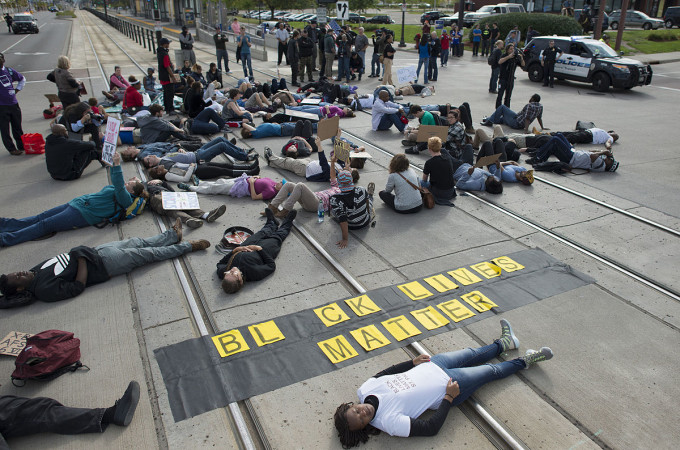
On June 13, 2020, thousands of French citizens joined a BLM protest in front of the Eiffel Tower. Before it was over, the protest had morphed to a riot. But this is not the first sign of Wokeness in France. Woke ideology permeated French universities for years, before infecting French
What’s driving today’s polarization around race? And what’s the answer? Two opposite answers—two narratives, if you will—are unfolding. One emphasizes systemic injustice and institutional racism. It views the problems black people face as sourced outside their community and attributes these problems to historic slavery and pervasive, systemic white oppression. The