A Look at China’s Ghosts: The One-Child Policy Captured on Canvas

We have written many times in this blog about gendercide – the war against females and the impact on societies. We have also written on the need for artists to speak prophetically to culture. Here is a story that combines the two.

Balladeer and Chinese artist Li Tianbing has powerfully captured in paint his boyhood during the one-child-policy of China. His ghostly images communicate more powerfully than words.

Li’s story reminded me of my first visit to rural China. Posters hung everywhere promoting the “benefits” of having only one child. But the eerie reality confronted me much more vividly: haunting scenes of tiny groups of children playing on the streets and a noticeable absence of little girls.

We now know the colossal unintended consequences of China’s misguided policy. Li says, ”My generation is unique, in China and in the world. We were the first not to fully know the meaning of the words ‘brother’ and ‘sister’.”

His generation may have been the first, but it is not the last. As our world hurtles into the tragic, suicidal, aberrant, and dreadful world where people cease to have children, China’s world without brides and without children will become increasingly commonplace. To get a glimpse of this world, go here to read Li’s story and see some of his paintings.

Please pass this link on to others who need to see a picture of the future without families.

For more on Li Tianbing read the Guardian Newspaper article.

If you want to push back against this tragedy, please join with our friends Chai Ling and Brian Lee at All Girls Allowed.

- Darrow Miller

Posted in Family, Population | Tagged , , | 2 Comments

Aid that Increases Poverty? A Case Study in Unintended Consequences

by Scott Wisely

Scott Wisely was born in Thailand to missionary parents, attended boarding school in Malaysia and spent four years in the Philippines. After earning a Masters degree in Third World Economic Development from Eastern University he has served in Papua (formerly known as Irian Jaya) since 1996. Scott describes his service as “focused on wholistic ministry with a big emphasis on discipleship.”  In particular, he helps operate an elementary school, a strategy which “impacts the whole family and community.”

Papuans were totally self-sufficient for thousands of years so it is a difficult task to convince them that they are hopeless and helpless. But in the last decade well-intentioned outsiders have made significant headway. The Papuans, who viewed themselves as “the people”–strong, free, brave and capable–are becoming dependent on government, mission, and aid organizations.

Beliefs are what shape us. If you convince someone he is poor, he will act poor.

I teach a college class of aspiring teachers about poverty and education. I asked them, “Who convinced  you that you should get everything free?” They blamed the outsiders. I asked, “Who made schooling and medical services free here?” When they named the head politician I asked where he was from. They got quiet because he is a local. I called to their attention the many campaign posters promising giveaways.  I said, “If I came to you and said ‘Oh, you poor Papuan student, I feel so bad for you. You were malnourished as a child and came from a single parent family. This is really hard what you are doing: working and going to school. You can’t do this. I will pay your school fees and I will give you clothes and food and a place to live and spending money. I’ll do your homework for you and take your tests.’ What do I believe about you? That you don’t have what it takes. You are weak and I am strong. You are poor and I am rich. You are stupid and I am smart. Is that what you are?

“What do I believe if I have to come in and put in a clean water system for you and build all your houses and teach you farmers to raise vegetables and take your kids to raise and educate myself? It says that I don’t believe you have what it takes. You don’t know how gravity works and you can’t glue PVC pipe or swing a hammer or farm or raise your own kids. You are helpless and hopeless.”

Anger rose on their faces because everyone hates being pitied and disrespected.

Then we talked about how God views us. He looks at each girl in the room and says,

You are my precious, beautiful, smart and very capable – daughter. I made you to love and live and praise me with your sweet voice. I made you to nurture and care. I delight in you.

He looks at each boy and says,

With me you have what it takes. I made you strong and brave and ready to lay down your life to protect those I love. I made you a builder, a leader, an influencer. You are THE man.

I challenged them to stop believing the lies of politicians and well intentioned AID workers and missionaries. Believe in God and what He says about you. You might not have much money or stuff but don’t take on the label ‘POOR’.”

There wasn’t a dry eye in the room. Grown men and women crying. We all want to be respected, not pitied.

Many well intentioned outsiders are unwittingly bent on convincing Papuans that they are poor. (See Steve Saint’s article, “Projecting Poverty Where it Doesn’t Exist”.) Compassion is a love for the hopeless and helpless. It is the brother of Pity and cousin of Tolerance. That whole family of loves is supposed to serve in the hospice or mental health ward, not venture out into the streets and accost healthy people.

Why don’t we see these peoples’ strengths? Why do we only focus on what they can’t do and what they don’t have? Is it because we have so little respect for them? For me, I believe the main reason is pride. I think I am stronger, smarter, healthier, and richer so I condescend in compassion or tolerance or pity. But are we really that wealthy? Are they really that poor? I asked my Ugandan roommate in Turkey why Development Associates Internationalhas such a great cross cultural team. “We respect each other. Each of us brings our strengths to the table.” Then he listed the strengths, and his list was as long as the list the Westerners bring. Wow! We need a lot more of this kind of respect-filled love.

Other villages have asked us to start a branch of our school for their kids. We always begin the discussion by saying they have to provide land, building and houses, and pay teacher’s salaries. We will partner with them and come up with the rest but this is THEIR school so THEY have to PAY for it.  They love being treated with respect but PAYING the price of being respected is a hard choice.

Recently we met with the church and village leaders in Eragaiam in the Walak tribe. (Watch our YouTube video, “4×4 school in Eragaiam”) I shared that I didn’t view them as poor but as strong, wealthy, brave and very capable people created in the image of God. Some tough Walaks started tearing up. They are starving for that kind of affirmation. They said, “We have to give the wood and materials and help to build this school. We have to build a road in. We are ready to pay the teachers’ salaries.” In the 60s the missionaries treated them with respect and thousands of churches, schools, and health clinics were built this way. In those days missionaries lived in the villages with them and saw their strengths and abilities every day. One wrote a great book called The Amazing Danis!: the title says it all. But times have changed. Now missions means a foray. Outsiders jet in for a short trip. They can only see what the people don’t have. Such a practice engenders little respect.

This village had asked us to help them start an elementary school, even though already had one. A beautiful school building stood 50 meters away from where were meeting. At 10 o’clock on a Tuesday morning it was totally empty. It was built and is supported with foreign aid money. The children attend is free. But they graduate with a shattered identity and crushed self-worth. Most cannot read, write, or do basic math. The villagers realize this and are ready to pay $60 a semester– in a place that Reuters reports as one of the poorest spots in one of the poorest countries in the world–for their kid to go to school.

In the book The Beautiful Tree by James Tooley, an African father was asked why he sent his child to the private school with its run down facilities when he could send his child to the government school that had great buildings and was free. He answered, “When you go to the market and someone is giving fruit away for free it is because it is rotten. If you want good quality fruit you pay for it.”

The villagers named our school Ob Anggen, “Good Fruit.”

Write Scott at shwisley@gmail.com

Posted in Economic Development, Education | Tagged | Leave a comment

LOVE NEVER FAILS: The Christian Response to Jihadism

Governments have the responsibility to defend their nation against terrorist enemies. But the church has a different responsibility: to love. Christ calls us to love even our enemies. The church responds to the violence of the sword with the vulnerability of the cross; to the culture of death with the culture of life; to hatred with love, injustice with justice, tyranny with freedom.

Photo by JakoJellema

Andrew van der Bijl (b. 1928), known as Brother Andrew, smuggled Bibles into communist countries during the height of the Cold War. After the fall of communism, he turned his attention to the Middle East. “We cannot win the war on terror with guns and bombs,” he says, “because everyone we kill is replaced by dozens more who seek revenge. . . . We believe that if millions of Christians would respond to Muslims with the love of Christ, that would do far more to remove the threat of terror than our military activities.[1] Brother Andrew challenges Christians to say, “‘I Sincerely Love All Muslims (I.S.L.A.M.)’ and to prove it by putting their arms around Muslims and say, ‘God loves you; therefore I love you.’”[2]

Liberato (not his real name) is a pastor from the Philippines and part of the minority Christian community on an island with a Muslim majority. He told me how his church became a love cell. Muslims wanted to overrun the central government and set up an Islamic state on the island. They sought to drive the Christians out by burning down their homes. (Imagine if someone in your community hated you enough to burn down your home, simply because you were a Christian.) The Philippine army arrived to crush the Muslim rebellion by blowing up the terrorist’s homes. Liberato responded by saying, “We need to love our enemies. We need to demonstrate God’s love.” None of the other pastors in the community agreed, but Liberato organized his church to rebuild the terrorist’s homes. Eventually other churches joined them. When I heard the story, they had rebuilt the homes of forty Muslim families. Not surprisingly, the attitude of the Muslim community toward Christians was changing dramatically.

I received a letter from a friend named Chris who works with the Disciple Nations Alliance affiliate in Africa. Chris had the privilege of speaking to pastors in Malakal, in what is now South Sudan, on the need for the church to minister to the needs of the larger community, including the Muslim minority. Chris describes a thrilling moment in the closing ceremony:

The highlight of the celebration was when a mosque preacher, an Imam, who we did not know was a participant, walked forward and said, “Having listened to the wholistic message of loving one’s neighbor as oneself, including loving your enemies, and the rest of the transformational messages, I hereby openly declare my departure from the Islamic faith and identify myself with the family of Jesus Christ.”

Abba Love, a large cell church in Jakarta, Indonesia, ministers in neighboring slums inhabited by Muslims. They have started schools, soup kitchens, literacy programs, and skills training for unemployed Muslims. When a group of radicals came to burn down Abba Love’s building, they were prevented by poor Muslims who streamed out of the community and surrounded the building, saying, “You are not going to touch this church. These people love us.”

May these examples be multiplied a million times over everywhere a church touches a Muslim community. The war from the East will be won through the self-sacrificial love of the church, through the Word becoming flesh in God’s people.

- excerpted from Emancipating the World: A Christian Response to Radical Islam and Fundamentalist Atheism by Darrow Miller

[1] Priya Abraham, “The Good Jihad,” World, December 8, 2007

[2] Stuart Robinson, Mosques and MiraclesRevealing Islam and God’s Grace (Upper Mount Gravatt, Qld., Aus.: City Harvest Publications, 2004), 298.


Posted in ETW | 3 Comments

LOVE CELLS: The Christian Answer to Terror Cells

A recent report from Australia showed video of a confrontation between atheists and Islamists. In light of the message of Darrow’s new book, this story caught our attention. It represents, as he put it, an opportunity to “stand in the middle and love.”

The following excerpt from Emancipating the World: A Christian Response to Radical Islam and Fundamentalist Atheism, elaborates on that idea.


The Starfish and the Spider by Ori Brafman and Rod A. Beckstrom relates an intriguing fact.* If you cut off the legs of the spider it will die, whereas if you cut off the legs of a starfish, the legs grow back. If you have a large enough piece of a leg, the leg will grow a whole new starfish. …

From this biological concept, the authors make a case for “leaderless organizations.” A hierarchal organization with a top-down structure is a spider. If the legs are cut off, the organization dies. Starfish-like organizations, on the other hand, have a DNA that permeates the group and allows it to replicate itself even if the legs are taken off. Brafman and Beckstrom suggest that al-Qaeda is a starfish, while the US army is a spider. If everything else were equal, who would win? The starfish!

What about the church? I would suggest that the early church was a starfish, while today’s church is more hierarchical like a spider. What would happen if today’s church became a starfish? The jihadists use the starfish model for terror cells. What would happen if the church spawned a starfish model of love cells? What if the DNA of Christ permeated the church in small cells that loved their enemies and nurtured kingdom values in their members? …

Love cells are viral by nature. Jesus uses four analogies of the organic (non-programmatic) nature of such cells. Christians are to function as salt, light, yeast, and mustard seeds. They are to take on a life of their own and have a positive impact in the community. One of my hero churches is the Watoto Church mentioned earlier. This cell-based church in Kampala, Uganda, is outwardly focused to meet needs in their community. The five hundred cells in the church were challenged to love someone dying of AIDS. Each cell cared for a person  while he or she was dying and then supported the family after the family member’s  death. We are motivated to love in this way by Christ’s example and by God’s command.

Another hero church comes from the past. German Count Nikolaus Ludwig von Zinzendorf (1700–1760) became a social reformer and founded the Moravian church, making his estate at Herrnhut available to shelter the poor and homeless. The Moravians were known, among other things, for engaging in wholistic mission. They sent out businessmen to start businesses and plant churches. At a time when most churches deployed one member cross-culturally for every thousand at home, the Moravians deployed one for every sixty. …

The Moravian legacy includes the story of two young men who wanted to minister to the two to three thousand black slaves on British plantations in the Caribbean. The slave owners forbade missionaries, so these young men sold themselves into slavery, and with the proceeds bought one-way passage to the Caribbean. As the ship pulled away from the dock in Copenhagen, the two young men waved and shouted at their weeping friends and family on the pier, “May the Lamb that was slain receive the reward of his suffering!”

This is love in action! This is how the invisible kingdom of God becomes visible through a life. If love cells engaged the two wars of our generation, what might be the result?

- excerpted from Emancipating the World: A Christian Response to Radical Islam and Fundamentalist Atheism 


* Ori Brafman and Rod A. Beckstrom, The Starfish and the Spider: The Unstoppable Power of Leaderless Organizations (New York: Penguin, 2006).


Posted in ETW | 2 Comments

Does DNA Teach the “Prosperity Gospel”?

- by Gary Brumbelow

A post last week entitled, Freedom, Prosperity, and the Great Commission triggered the following response from a reader and blogger in his own right, Jon Davis, Jr.

I find that if I say things like what you have said here some Christians respond with their anti-“prosperity-gospel” alarms going off.

Yet there is clearly a distinct difference between what you are saying and the somewhat “magical” and almost “superstitious” view of prosperity that some Christians have.

I think your message is this: Following Christian Principles naturally tends to produce human prosperity. We are promised “tribulations” in this life, so there is no guaranteed absolute “formula” with which to “get rich quick;” and yet economics and business and abundance and money and planning, etc. are all things that God has addressed for us in the Bible.

Any pointers on how to help people differentiate between an out-of-balance “prosperity-gospel” and the kind of thing you are talking about?

Blessings to you in Jesus name.

Jon Davis Jr.

Thanks very much, Jon, for your helpful comment. Yes, sometimes people mistake this message for the prosperity gospel, (“If you trust God enough you will be materially blessed, and if you are not materially blessed, something is wrong with your faith or obedience.”) But it’s not. I can articulate a couple of differences. For one thing, the DNA does not believe that Christians somehow deserve to have a pleasant, trouble-free life. The Bible is very clear that God often uses suffering and hardship in the life of the believer.

A second important difference has to do with what is meant by “prosper.” As our friend, Elizabeth Youmans, points out, “Prosper” in the Hebrew does not necessarily refer to material wealth, but means “to accomplish what is intended by God.” The DNA message is not about personal enrichment and consumption, but about being part of God’s big agenda to bless others.

God has a big agenda. A whole-life agenda. Without any question, His ultimate blessing is adoption into His family forever, an adoption made possible by the substitutionary atonement of Christ. That’s the supreme blessing, not the only blessing. To suggest that the salvation of the soul is the only human need God cares about is to make God less compassionate than every reasonably competent human father.

A key theme of the Bible is found in God’s word to Abraham in Genesis 12, I will make you into a great nation and I will bless you; I will make your name great, and you will be a blessing. I will bless those who bless you, and whoever curses you I will curse; and all peoples on earth will be blessed through you” (Gen 12:2-3 NIV, emphasis added). God blesses the Christian so that he or she can bless others.

Darrow recently spoke at a church  in Australia and said it like this,

We live in a time when people are very focused on themselves. We pray, ‘Lord, bless me.’ Sometimes he does, and so we pray again, ‘Lord, bless me again!’ … We are a people that tend to focus on ourselves. We see ourselves as a reservoir for God to fill. But we are not a reservoir; we are a channel of blessing. God blesses us not for ourselves but for the sake of others. 

In his new book, Emancipating the World, just released last week, Darrow connects the dots between this concept and the Great Commission:

From the beginning of Scripture to its end we see God’s love for the nations. God raised up Abraham and his descendants to be a blessing to all nations.[1] Centuries later, the apostle Paul remarkably connects the gospel to the blessing of nations: “The Scripture foresaw that God would justify the Gentiles by faith, and announced the gospel in advance to Abraham: ‘All nations will be blessed through you’” (Gal. 3:8; emphasis added). Now in these last days God has raised up the church to disciple the nations.

Moses also captures the comprehensive maximum of obeying all that Christ commanded: “For I command you today to love the Lord your God, to walk in obedience to him, and to keep his commands, decrees and laws; then you will live and increase. . . . I have set before you life and death, blessings and curses. Now choose life” (Deut. 30:16, 19; emphasis added). God’s commands divide truth from falsehood, good from evil, beauty from ugliness. The person or nation who understands and applies them moves toward life. Those who don’t, move toward death. To try to live outside the framework of God’s universe is folly.

[1] Gen. 12:3; 18:18; 22:18; 26:4; 28:14; Ps. 72:17; Acts 3:25.

Posted in ETW, Wholism | Tagged , , , | 4 Comments

Charity Like the God We Worship

It is a truism that we build societies in the image of the God we worship. The Psalmist put it this way:

15 The idols of the nations are silver and gold,
the work of human hands.
16 They have mouths, but do not speak;
they have eyes, but do not see;
17 they have ears, but do not hear,
nor is there any breath in their mouths.
18 Those who make them become like them,
 so do all who trust in them.   Psalm 135:15-18

Likewise, Marvin Olasky reminds us, “Cultures build charities in the image of the god they worship.” We see this in the three distinct models of compassion  today. The Biblical worldview has given rise to Social Protestantism. The atheistic worldview has birthed two forms of compassion: Social Darwinism, pessimistic in nature, and its optimistic counterpart, Social Universalism.

Social Protestantism was the application of a comprehensive moral philosophy found in the Bible. God cares about every human and all his/her relationships. God’s agenda is wholistic healing, thus Christians should be concerned about the causes and solutions to all forms of poverty. Marvin Olasky describes four principles of Social Protestantism which I have paraphrased as:

-          God is Creator. He has established a creation order – a framework for healthy living. He also personally intervenes to bring healing to those who violate his order. It follows that human beings are to personally intervene to help the poor.

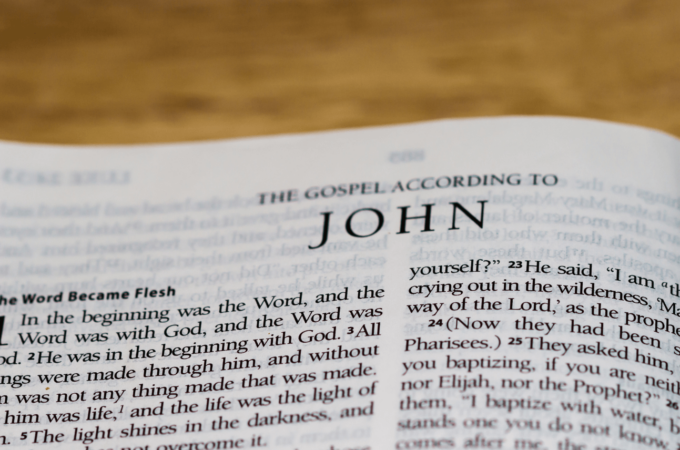
-          Because God loves human beings he chose to walk in their world, to be in relationship with them. The Word was made flesh and dwelt among us (John 1:14). This precludes charity done at arm’s length. It is better to know people in their poverty, to know them and their families as individuals.

-          God’s laws govern the universe. Poverty comes from violating God’s order. If people are to be helped out of poverty, they must be taught to obey all that [Jesus] commanded (Matthew 28:20).

-          Sometimes the most compassionate act is withholding help. We create dependency when we give charity to those able but not willing to help themselves. We leave them enslaved to their vices.

In the Christian scheme the giver was not merely a donor of money, but someone who shared their time, talent, and treasure. Both parties benefited from the arrangement: poor people received opportunity to help themselves out of poverty and the benefactor grew through “suffering together with” another human being. The charity was connected to the virtue of work – the protestant ethic of labor, saving, and giving that established life patterns that lifted people out of poverty.

photo of Charles Darwin

Charles Darwin

Social Darwinism is the logical application of Darwinism’s survival of the fittest in the social and economic realms. It produces a class of pessimistic humanists who in fact were anti-compassionate. Man is merely an animal; only the economically fit should survive. Herbert Spencer (1820-1903), the British Social Darwinist who coined the phrase “survival of the fittest,” wrote: The unfit must be eliminated as nature intended, for the principle of natural selection must not be violated by the artificial preservation of these least able to take care of themselves.

In The Cause of Pauperism, the 1876 report to the New York State Board of Charities states:

The examination has made it clear that by far the greater number of paupers have reached that condition by idleness, improvidence, drunkenness, or some form of vicious indulgence. It is equally clear that these vices and weaknesses are very frequently, if not universally, the result of tendencies which are to a greater or less degree hereditary…. [V]igorous efforts must be instituted to break the line of pauper descent.

Social Darwinists dehumanized the poor. Their desire was to eliminate poverty by getting rid of the poor. There have been two strains of Social Darwinists, the passive and the proactive. The passive simply wanted charities to stop intervening and let nature take its course. In 1880 Social Darwinist William Graham Sumner wrote,

Nature’s remedies against vice are terrible. She removes the victims without pity. A drunkard in the gutter is just where he ought to be, according to the fitness and tendency of things. Nature has set up on him the process of decline and dissolution by which she removes things which have survived their usefulness.

Auschwitz

The proactive Social Darwinists wanted to “help nature,” to speed up the process of survival of the fittest by actively eliminating the poor. The eugenics movement, popular in the first half of the 20th century, sought to employ science in the improvement of human kind by getting rid of those human beings deemed unworthy of life. The death camps of Adolph Hitler’s Third Reich were proactive Social Darwinism. In the United States, Margaret Sanger, the founder of the Birth Control League (now Planned Parenthood), led a proactive Social Darwinist lobby. She sought to help evolution along by eliminating people of color, the poor, and people who were mentally retarded through sterilization and abortion. As we begin the 21st century, these forces are back again with abortion, infanticide/ ”post-birth abortion,” fetal stem-cell research, and euthanasia.

While Social Darwinism is the logical extension of Atheism in the social realm, Social Universalism is the specious class of optimistic Humanists who are sentimental, not compassionate, about the poor. They proclaim the love of mankind without a love for God. Many are altruistic: they live for others.

The British children’s writer, Beatrice Webb (Potter) of The Tales of Peter Rabbit fame is an example of Social Universalism. She wrote of her optimistic Humanist convictions in her diary:

Towards Humanity, who is the only true Great Being, we, the conscious elements of whom she is the compound, shall henceforth direct every aspect of our life, individual and collective. Our thoughts will be devoted to the knowledge of Humanity, our affections to the Love, our actions to her service.

In the universalist’s world, consciousness of sin shifted from personal sin and personal responsibility to class consciousness and group responsibility. The wealthy class created poverty, thus it was their responsibility to end poverty. The poor were no longer individuals and families, but rather a class of people. Individuals were not big enough to solve this class problem. Only the government was big enough to deal with poverty.

Liberal theologians, whose presuppositions were born out of a secular humanist worldview, gave “biblical justification” to the humanist agenda. As Olasky points out:

Liberal theologian George Herron went one step further, claiming “that the public ownership of the sources and means of production is the sole answer to the social question, and the sole basis of spiritual liberty.”

Olasky continues:

Their theology, labeled with public relations brilliance the “social gospel,” emphasized God’s love but not God’s holiness, and thus urged charity without challenge. The materialist bias played up physical needs but were embarrassed by evangelism and spiritual need. “Save the world but not the individual” became a motto.

As the Christian memory faded, personal involvement diminished and was replaced with “writing a check.” Nonprofit organizations became surrogate care givers. Taxes – coercive giving – replaced volunteerism and personal charity. The idea that man is good and structures evil has led to wild utopian visions of the future and invested in increasingly powerful central governments whose responsibility is to bring “heaven on earth.”

-          Darrow Miller

Posted in Compassion | Tagged , , , | 1 Comment

The Price for Fighting Gendercide – The Story of Chen Guangcheng

Our friend, Chai Ling of All Girls Allowed, testified before the Congress of the United States today regarding the Chinese dissident Chen Guangcheng. Please see her words below and pray that Chen Guangcheng would be reunited with his family and would be free to leave China. Here is part of Chai Ling’s testimony. - Darrow Miller

Last week, I and other advocates of freedom in China watched with joy as Chen Guangcheng made his bid for freedom. Truth mirrored art in his escape, which played out like The Shawshank Redemption. (Chinese web censors even placed “Shawshank” on their list of banned search terms.) The blind lawyer scaled a wall, crossed a river, and evaded eight rings of vigilant guards to break free. He then traveled on foot through fields for twenty hours before meeting activist He Peirong at a pre-arranged location. She and others risked their lives to take him to the US Embassy in Beijing, where they knew he would find freedom.

But we let them down. Shamefully, US officials encouraged Chen to leave the Embassy and stay in China, in accordance with the Chinese government’s request. He left the Embassy yesterday morning under duress after being told that the Chinese authorities were going to take his wife and children back to Shandong and remove the possibility of reunification. The US denied that any coercion took place—but if this is not coercion, then what is? What has become of the American government? Is it a mere enabler of the Chinese officials’ brutal treatment of Chen, plus the millions of women and children he defended?

US Embassy staff assured Chen they would stay with him at the hospital to ensure his safety, but left him without protest after the Chinese told them “visiting hours” had ended. They also failed to get a written version of the agreement they reached with the Chinese negotiators, an elementary error that could have disastrous consequences. They should have known better, having been given the authority to represent America. How could anyone not see the necessity of a written statement? And how could they ignore the fate of the activists who helped Chen escape? Many of them have been jailed since Friday.

Now Chen’s wife is reporting that the family is in grave danger. He is under surveillance and American officials have reportedly been barred from visiting him.

I do not believe that Secretary Clinton and Ambassador Locke were simply naïve, that they thought China would honor its word and allow Chen to live in freedom and safety. Nor do I want to believe that they willfully misled Chen into thinking this was a possibility. Freedom for human rights activists within China is not a reality, and I can only conclude that the current administration viewed Chen Guangcheng as a distraction that needed to be dealt with quickly—he was just a fly to be swatted away before diplomatic talks began. But this “fly” they swatted is a hero to everyone in China who values freedom and admires the United States’ commitment to humanity. With sadness, I can tell you that the network of activists that watched this week with bated breath is now demoralized and hopeless.

I will not mince my words: this was an unqualified disaster. It was a disaster for the Obama administration, for the America we love, and for those in China who pray for freedom. If there is any way to turn this around, we must. And I call upon you, Honorable Members of Congress, to try.

Read more at All Girl’s Allowed.


Posted in Uncategorized | Leave a comment

Freedom, Prosperity, and the Great Commission

by Gary Brumbelow

In the name of Allah take this and use it wisely.

A few years ago I watched video presentation about the Grameen Bank. Founder Muhammad Yunus was handing out $20 bills to beggars in Asia to finance their micro-business efforts. As he passed along the money, he charged them with that declaration.

Let’s give Yunus his due: he blazed new ground in using financial assets to help millions people escape poverty (notwithstanding the controversies in his career). For that he is to be commended. In fact it is another monotheistic framework, Judeo-Christianity, that pushes this concept further.  In the creation, God established us as imago Dei to be economic man. We were made for enterprise, to use our imagination and problem-solving skills to create wealth and human flourishing.

Some Christians suppose none of this has anything to do with the gospel. But the Great Commission of Jesus Christ captures every dimension of life—“all that I commanded you”—because every dimension is God’s concern.

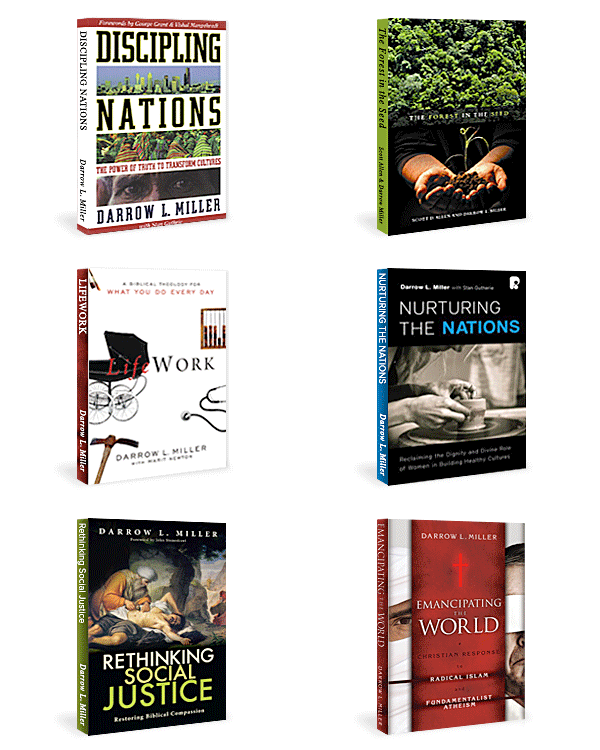
In his just-released book, Emancipating the World, Darrow Miller says, “I am compelled to call Christians, for God’s sake and for the health and prosperity of their nations, to consciously think and act from a biblical framework.” In the following pages, he says,

The kingdom offensive begins with recognizing “Christ and him crucified” (1 Cor. 2:2). It commences with people putting their faith in Christ for their salvation. Christ died to save the whole of each person and all of their relationships. But this is not the end; it is the beginning. The kingdom offensive puts feet to the prayer, “Thy kingdom come, thy will be done on earth as it is in heaven.” We are conduits of truth, goodness, and beauty to our atheistic and Muslim neighbors. We are to engage in a love-and-service offensive. Our message?

Life is better than death.
Health is better than sickness.
Liberty is better than slavery.
Prosperity is better than poverty.
Education is better than ignorance.
Justice is better than injustice.[1]

All of this reinforces much of what Steve Chapman writes in a recent article at reason.com, “Toward the Conquest of World Poverty.” Noting “a decline in both the poverty rate and the number of poor in all six regions of the developing world” he ties that success to human freedom.

Economic growth, not redistribution, has been the surest cure for poverty, and economic freedom has been the key that unlocked the riddle of economic growth. … Among many people a generation ago — and among a few today — free markets and private property were seen as the cause of poverty. But the number of adherents has dwindled in the face of repeated refutation.

Chapman points to a report by the Cato Institute, “Economic Freedom of the World,” which documents that

over the past 30 years … the average country’s economic freedom score has risen from 5.53 (on a 10 scale) to 6.64 — a significant improvement that has paid off in higher growth and earnings. The evidence indicates a reliable pattern: the freer the economy the faster the growth (emphasis added).

In Emancipating the World, Darrow develops his argument that principles of freedom and prosperity are part of the shalom of God. See these further excerpts.

In the Old Testament, the word translated “peace” is shalom. Its range of meanings include: prosperity (favorable circumstances); completeness (the fullness of a collection); safeness–salvation (free from danger); health (well-being or wholeness); satisfaction–contentment; and blessing (giving kindness to another). We often speak of shalom peace as the fulfillment of human existence: welfare, health and freedom from worry. In the New Testament, the word translated “peace” is eirēnē. It means harmony, tranquility.

Only one story reflects reality; there is only one Lord. Our task is to live out the true story in the world. God has revealed his truth through the Word of God—the historical narrative of his work in the world. The biblical narrative reveals humankind’s purpose on earth in four major stages: creation, fall, redemption, and consummation. In this flow of history, God has given human beings two mandates, or commissions. The first is the Cultural Commission; the second is the Great Commission. To be truly effective in its mission, the church must understand and embrace both of these. We must reconnect the Cultural Commission and the Great Commission.

            See, I set before you today life and prosperity, death and destruction. For I command you today to love the Lord your God, to walk in obedience to him, and to keep his commands, decrees and laws; then you will live and increase, and the Lord your God will bless you in the land you are entering to possess. Deut 30

Christians are to stand for freedom, order, and justice; for communities and families; and for the sanctity of human life from beginning to end. We are to create peace, health, and prosperity and care for God’s creation and every individual.

This is the message followers of Christ are to carry to the world.

Or, to put it another way, In the name of Christ, take this and use it wisely.


[1] Lawrence E. Harrison, The Central Liberal Truth: How Politics Can Change a Culture and Save It from Itself (New York: Oxford University Press, 2006), 9.

Posted in Economic Development, ETW, Freedom | Tagged , , | 1 Comment

Out of Africa: What Nation Discipling Looks Like

Jesus commanded His followers to disciple the nations. What does a discipled nation look like? In his forthcoming book, Emancipating the World, Darrow Miller writes:

Shaped by today’s values, the church has focused its evangelism and discipleship on individuals, blinded to the communal component of the Great Commission. Individuals must come to a saving knowledge of Christ, but this truth must not blind us to the biblical concept of community. …

Dallas Willard, philosophy professor at the University of Southern California, writes in The Divine Conspiracy: “You lead people to become disciples of Jesus by ravishing them with a vision of life in the kingdom of the heavens in the fellowship of Jesus. And you do this by proclaiming, manifesting, and teaching the kingdom to them in the manner learned from Jesus himself. You thereby change the belief system that governs their lives.”[1]

Jesus taught that his people are salt and light. Salt must come out of the shaker to flavor and preserve. Light cannot bring life, illuminate, or heal unless it comes out from under the bushel basket. Christians are salt and light, not theocrats; influencers, not autocrats; organic, not hierarchal; bottom up, not top down. We are to be people of light in a world of darkness, people of compassion in a world of cruelty, people of justice in a world of wrong, people of beauty in a world of the mundane. Christians are to be radicals in the traditional sense of the word: having roots, going to the origin. We are to call societies back to the root, back to first principles.

This excerpt is a great introduction to a story from Africa. Chris Ampadu serves with Harvest Foundation in Ghana. He’s been partnering with Mercy Ships to teach DNA concepts to local leaders. Chris’s report paints a picture of a remarkable beginning to the  inside-out transformation of a nation.

Last week’s experience in Kara with Mercy Ships was just wonderful as almost 400 community leaders were mobilized to be trained by us.

On the last day, l started by asking the participants to share a discipline of love done the previous day as a result of what they learned. We had over 50 people including Moslems who shared how they have changed their attitude towards their wives and started showing true love to them. This is a place where women do not have dignity and are disrespected. Some shared testimonies of reconciliations, while others have started planting flowers in their homes, creating beauty and taking the mantle of stewardship of nature and their environment.

For me, it was of great joy and beauty to see Christian pastors sharing lunch with Moslem heads, Imams, and others on the same table.

At the end of the conference, a steering Samaritan team was formed, fifteen members including the chief Imam, to continue with the agenda of love, unity and development.

l made a presentation of a copy of Hope for Africa to the chief Imam. Even though he was very grateful, he insisted in buying for himself “If Jesus were Mayor” to my surprise! Anyway, we are now friends and today, the Moslem youth leader called and said the committee has already met and a second meeting will be held on Monday 19th. He was full of praise and appreciation for our teachings and promised that they will do whatever it takes to realize the aim and objectives of Mercy Ships, i.e. “Partnership for Development”

To God be the glory.


[1] Dallas Willard, The Divine Conspiracy: Rediscovering Our Hidden Life in God (New York: HarperCollins), 305; emphasis added.

Posted in Discipleship, ETW, Islam | Tagged , , | Leave a comment

Sexual Anarchy: Judeo-Christian Morality As Deviant

Societies that did not place boundaries around sexuality were stymied in their development. The subsequent dominance of the Western world can largely be attributed to the sexual revolution initiated by Judaism and later carried forward by Christianity.

So writes Dennis Prager, Jewish theologian, writer, lecturer and radio host in his paper, Judaism’s Sexual Revolution.

In a day when sexual promiscuity is considered normal, when the bounds of license are continuously expanded, where children are sexualized, women are commoditized and sexual deviancy is marketed by Hollywood, Dennis Prager may seem shrill and out of touch with reality. But could it be that he is the one sane voice in the discussion?

Prager argues that male sexuality is utterly wild and undisciplined, it is polymorphous – seeking sexual gratification in all sorts of forms and behavior. It is found outside of marriage, with multiple partners, other men, in transsexual manifestations, with children (pedophilia), with animals (bestiality) or with inanimate objects. In a word, fallen male sexuality is driven by orgasm. Indeed, the Judeo-Christian standard of Eros within the bounds of a covenant marriage is now considered deviant behavior (i.e. departing from the norm). Prager writes: “It is Judaism’s sexual morality, not homosexuality, that historically has been deviant.”

In fact, it is the glory of sexuality within the framework of marriage that began to civilize societies and build Western civilization. Prager writes: “When Judaism [and later Christianity] demanded sexual activity be channeled into marriage, it changed the world. The Torah’s [the books of Moses] prohibition of non-marital sex quite simply made the creation of the Western civilization possible.”

On November 5, 2011, Jerry Sandusky, the celebrated Penn State football defensive coordinator, was arrested on charges of pedophilia with boys as young as eight years old. He has been charged with sexual abuse of eight boys but the number could go as high as seventeen. The national revulsion, probably short-lived, cannot obscure the truth: Sandusky is the symbol of sexual anarchy in our time.

We should not be shocked that unhinged morality leads to unbridled sex. Now, there is a movement to legitimize sex between men and boys. In 1973 American Psychiatric Association declassified homosexuality as a psychological disorder. Today homosexual relations are increasingly seen as normal in the West. Witness the major efforts to legalize so-called “same sex marriage.”

Now, forty years after normalizing homosexuality, the APA is cooperating with pedophiles to make adult-child sexual acts “normal.” Attorney and university professor Chris Banescu reports on the August 17, 2011 gathering of the pro-pedophilia group, B4U-ACT, in Baltimore, Maryland. He writes that the event was “… attended by researchers, professors, mental health professionals, and ‘minor-attracted persons’ (MAP, a euphemism for ‘adults who crave sex with children’).” These individuals endorse adult molestation of children, consider this sexual perversion as normal, and advocate for the declassification of pedophilia as a mental illness by the APA. (For more read Banescu’s article.)

(Note the drift in language. We have moved from adult male predators of children to “minor-attracted persons.” Will the next forty years bring the legitimizing of Zoophilia? Will people who engage in bestiality become known as “animal-attracted persons”?

A troubling corollary is the pattern of sexual anarchy growing among Christ followers. Instead of the church living counter to the behavior of society, she is conforming to it. Instead of witnessing in word and lifestyle to the creation narrative of covenant marriage and the beauty of human sexuality, many professed Christians are living in sexual anarchy. Tragically, eighty percent of unmarried, evangelical Christians in the US between the ages of 18-29 have had pre-marital sex. Thirty-two percent of self described “born again” Christians have been divorced. Both statistics are virtually the same as society as a whole. Forty-four percent of young evangelicals support so-called “same sex marriage.” Eighteen percent of born-again Christian women use abortion as a means of contraception.

It was the teaching and the living out of scripture by orthodox Jews and Christians that gave dignity to women, sanctified marriage, and civilized the West. As the West returns to fallen male’s unbridled passion, she will become more brutal and violent.

In a world where sex has been reduced to recreation, entertainment, yea “plumbing,” there is something beautiful about the face-to-face intimacy of human Eros, the one flesh of God’s intentions as given at creation. In a world where unbridled sex reduces human beings to animals we need to call people to be human again. The high-water mark of human sexuality is reflected in one of the most beautiful poems depicting sexual intimacy in both its physical and transcendent nature, The Song of Solomon. We hear it in the words of the beloved:

Like an apple tree among the trees of the forest is my lover among the young men. I delight to sit in his shade, and his fruit is sweet to my taste.  He has taken me to the banquet hall, and his banner over me is love.  Strengthen me with raisins, refresh me with apples, for I am faint with love.  His left arm is under my head, and his right arm embraces me.  Daughters of Jerusalem, I charge you by the gazelles and by the does of the field: Do not arouse or awaken love until it so desires. (Song of Songs 2:3-7)

Eros is the gift of God to mankind.

Set me as a seal upon your heart, as a seal upon your arm, for love is strong as death, jealousy is fierce as the grave. Its flashes are flashes of fire, the very flame of the LORD. Many waters cannot quench love, neither can floods drown it. If a man offered for love all the wealth of his house, he would be utterly despised. (Song of Songs 8:6-7)

Let us abandon sexual anarchy for the glorious sexual order!

- Darrow Miller

Posted in Culture, Morality | Tagged , , | 2 Comments