
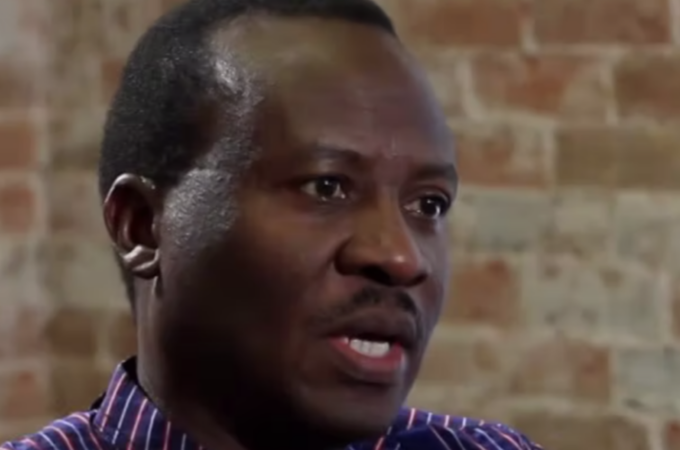
Stephen Langa is a Ugandan layman who works in the arena of his nation’s laws and civic life. He is not a theologian. He has not published books. But in 2000, he encountered a biblical worldview framework that reoriented everything — and what he did with that framework is one of the most instructive stories I know about what it means to be a Christian in the public square.
Before that encounter, Langa had operated, as he later put it, under a ‘religious’ or ‘evangelical’ worldview — one that reduced the influence of Christians to spiritual matters while abandoning the rest of life to others. It is a posture familiar to many serious Western Christians: faith for Sunday, secular frameworks for Monday. The problem, Langa came to see, is that this is not actually a Christian worldview at all. It is a capitulation.
The turning point came when he grasped three things. First: human beings made in the image of God have a God-given purpose that extends into every sphere of life — including civic life. Second: the Great Commission is not merely about saving souls but about teaching nations to obey everything Christ commanded. Everything. Third — and this is the one that lit a fire under him — God audits the laws that nations make.
That third insight came straight from the prophets. ‘Woe to those who decree iniquitous decrees,’ Isaiah writes in chapter ten, ‘and the writers who keep writing oppression.’ Psalm 94 asks: ‘Can wicked rulers be allied with you, those who frame injustice by statute?’ First Timothy 1 reminds us that the law is good when used lawfully — implying that law can also be used unlawfully, unjustly, in ways that put a nation on a collision course with God.
Langa’s conclusion was simple: Christians are representatives of the Kingdom of God on earth. When we pray ‘your kingdom come, your will be done, on earth as it is in heaven,’ we are not reciting poetry. We are praying a mandate — and we are implicitly volunteering to be instruments of its fulfillment. That includes the laws our nations make.
So Langa got to work. Over the following years, he engaged Uganda’s legislative and civic processes — not to take power, not to establish a theocracy, but to bring the conscience of the Kingdom to bear on the laws his nation was writing. He worked to advance laws compatible with Kingdom principles. He worked to oppose laws that were not. He writes with characteristic humility: ‘We are not perfect and there is still a lot we need to learn.’ But he adds: ‘I can confidently say that the discipling of our nation by the Body of Christ as salt and light is within reach.’
This is not a story about Uganda. It is a story about what happens when a Christian actually believes what he claims to believe — and then follows it to its conclusions. The same conclusion can be made and should be made by thoughtful Christians in every nation on earth.
Stephen Langa, came to these truths through his own encounter with the full scope of biblical reality. He did not wait for a cultural permission slip. He occupied his sphere.
The question his example puts to Western Christians is not complicated. It is the same question the Great Commission has always posed: are we teaching the nations — including our own — to obey all that Christ commanded? Or only the parts that belong to Sunday?
Because here is what history tells us: when Christians withdraw from the legislative and civic spheres, other worldviews fill them. The laws that get written in the absence of a Kingdom conscience do not become neutral. They reflect somebody’s vision of justice and human dignity. They are never nobody’s.
Langa understood this. He is still acting on it. The church in the West, which built the very institutions now eroding around us, would do well to remember what he learned.
 Print this page

0 Comments