
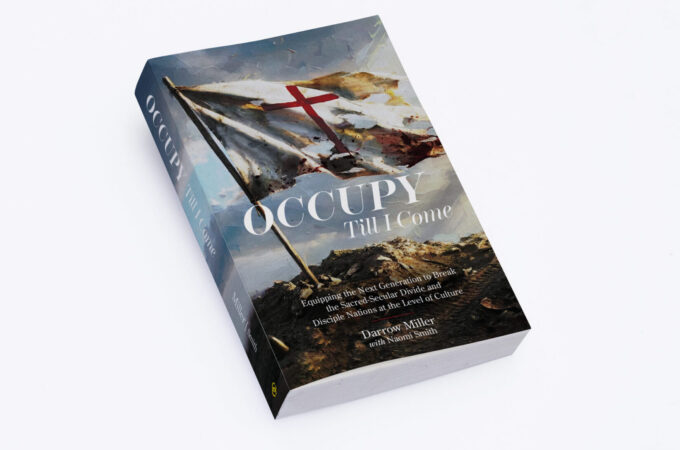
This blog highlights one of the most important truths for understanding America’s story—and our calling in this 250th anniversary year.
One of the great myths of our age is that freedom can exist apart from a moral and spiritual foundation. Yet a people who believe that eventually surrender the very freedoms they cherish.
Jesus said,
“If you continue in My word, then you are truly My disciples; and you will know the truth, and the truth will make you free.” (John 8:31–32)
Notice the connection. Jesus ties freedom directly to truth. Freedom is never detached from reality. It is the fruit of living according to God’s design.
America’s founders understood this. Freedom did not mean the right to do whatever one desired. They knew that unrestrained license eventually destroys both the individual and the nation. True liberty, as Scripture defines it and as the founders understood it, is the freedom to live as God intended.
The Exodus provides the biblical pattern. God did not deliver Israel from Pharaoh so they could cast off all restraint. He delivered them so they could meet Him in the wilderness, receive His law, and become a people who reflected His character. They were liberated from one master so they could joyfully live under the authority of the true King.
The same principle applies to every nation. Freedom flourishes when individuals and families order their lives according to truth. Bondage grows wherever lies are embraced.
This is why the founders placed such emphasis on self-government. Liberty requires a people capable of governing themselves from the inside out. Government will either come from “we the people” or it will increasingly come through external control. Laws alone can never sustain a free society. External restraint can limit evil for a season, but only internal transformation produces lasting liberty.
The founders’ vision of self-government rested upon a thoroughly biblical understanding of human nature. People are made in the image of God with inherent dignity and responsibility, yet they are also fallen and in need of redemption. Only a people shaped by truth and virtue can remain free.
The American experiment was built upon this conviction. Even the opening words of the Constitution—“We the People”—reflect more than a political arrangement. They echo the biblical idea of a covenant people living under God’s authority. The doctrines of the imago Dei and the priesthood of all believers helped form the American commitment to representative government, limited civil authority, and shared responsibility.
One of the greatest safeguards against tyranny is not simply limiting government. It is raising men and women who govern themselves before the face of God.
For the 250th Anniversary
Many modern accounts portray America’s founding as the product of Enlightenment rationalism or deism. In Occupy, we challenge that narrative. The principal architects of America’s founding documents were overwhelmingly shaped by orthodox Christianity and by a worldview deeply formed by Scripture—especially through the influence of the Geneva Bible.
The principles of liberty, consent of the governed, separation of powers, and the protection of God-given rights did not emerge from a philosophical vacuum. They were developed through centuries of Christian reflection on biblical law, human dignity, civil government, and the flourishing of society.
This is not an argument for Christian nationalism in the way the term is often caricatured today. It is simply historical honesty. And history carries a challenge for the present. If biblical truth helped build the foundations of American liberty, then recovering that foundation is essential if we hope to renew it.
Breaking the Sacred-Secular Divide
The sacred-secular divide has convinced many Christians that government and public life are “secular” arenas where Scripture has little to say. Nothing could be further from the truth.
Self-government is profoundly theological. It begins with men and women submitting themselves to Christ and then extends outward into the family, the church, the marketplace, education, and civil society. When the Church retreats from these arenas, she abandons some of the very means God has given to promote human flourishing and disciple cultures.
Action Point
Ask yourself—and your household:
What does self-government look like in our family?
Are we cultivating hearts that willingly submit to God’s truth, or are we merely relying on external rules and cultural expectations?
Then prayerfully identify one sphere of public life—a school board, city council, neighborhood association, business, or civic organization—where you can begin bringing biblical wisdom with humility, conviction, and courage.
As we commemorate America’s 250th anniversary, the question is not merely how the nation was founded. The greater question is whether we will recover the biblical foundations that made ordered liberty possible in the first place.
Join us next time as we conclude Part Two by exploring the Geneva Bible and how God’s outlaws helped shape America.
For the Kingdom,
Darrow Miller and Friends
 Print this page


0 Comments