Imagine with me for a moment Daniel in Babylon. He had made a name for himself. He was exalted as one of the king’s best advisors. He was perhaps a bit strange because of his religious devotion and the particular discipline of praying to his God three times a day. Yet people respected him and honored him. Then the law came forth from a deceived king that all subjects of the kingdom must only pray to him.
Imagine the pressure upon Daniel to bend to this law. Imagine what his inner dialogue must have been like as he walked back to his dwelling place to bow to the one true God. He was ordered to participate in a lie: praying to the king and only to the king. Daniel was well aware that he would be punished by death if he did this. However, he also knew that if he did this, he would be compromising Truth and faithfulness to the one true God. So, Daniel did what he always did; he prayed to the one true God. But that day, that act took the courage to refuse.
While in many times and seasons, it is wise for believers to engage culture with dialogue, wisdom and service, there are moments when faithful Christians must refuse to participate in what is clearly false, even when it costs reputation, relationships, livelihood, or even our lives. We have many biblical examples and those from recent history to show that refusal, when done with clarity and humility, can be one of the most powerful forms of witness. Though costly, the act of refusing to tacitly agree with a lie can become the very voice of clarity necessary to embolden other believers to proclaim the truth no matter the cost.
It’s important to note that this is not angry rebellion. It is Spirit-led, wise, and often costly obedience.
Connection to the 250th and Geneva Bible Legacy
The Geneva Bible readers, among the founders and the Reformers before them, understood the cost of refusal. Many paid with their lives or livelihoods. They refused to bend the knee to false authority because they answered to a higher King. That same spirit is needed today if we are to recover the foundations.
Breaking the Sacred-Secular Divide
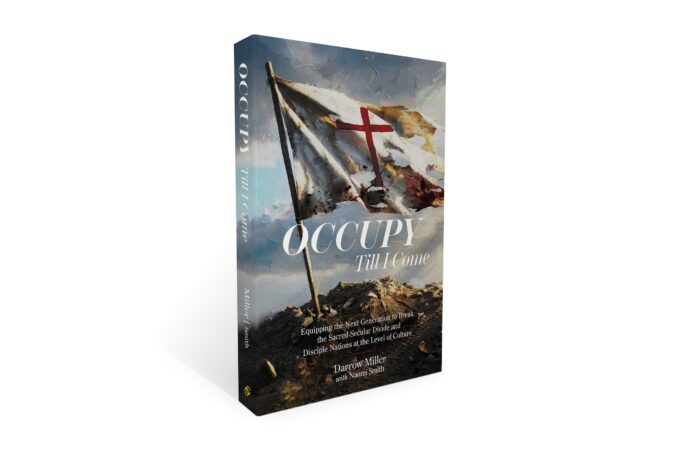
Refusal is often most needed in the “secular” spheres — business, education, government, media — where pressure to compromise is strongest. The divide has trained many Christians to think refusal is only for “religious” matters. This section in Occupy destroys that false distinction.
Action Point
Pray and reflect: Is there an area in your life right now where you are being pressured to go along with something that contradicts biblical truth? Ask the Lord for the courage to refuse wisely and the wisdom to do it in a way that points people to Christ rather than away from Him.
Courageous refusal, done in love, can be a powerful seed for cultural renewal.
In the next blog, we move into the heart of Part 2 — the biblical foundations of freedom.
For the Kingdom,
Darrow Miller And Friends
 Print this page