
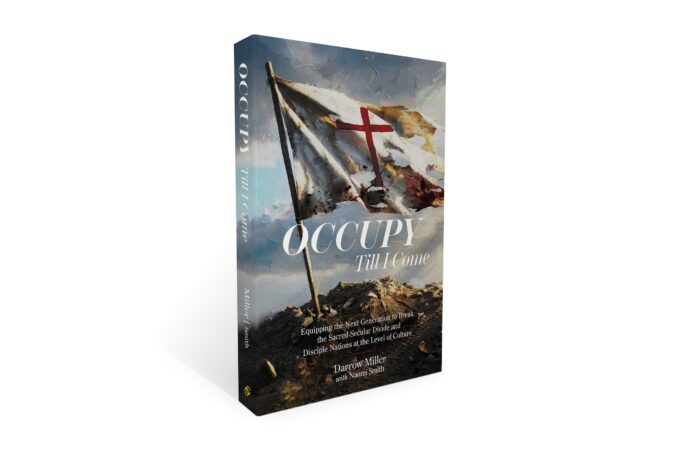
In the last blog, we began applying the command to “Occupy Till I Come” to the different spheres of everyday life. We first looked at the family—the first culture we are called to disciple with care. Then we considered our understanding of the Church and how a biblical paradigm shapes the way we relate to fellow believers and engage our cities.
Now we turn our attention to the city gates. But before we can understand what it means to occupy the gates, we must first recover a biblical understanding of our work.
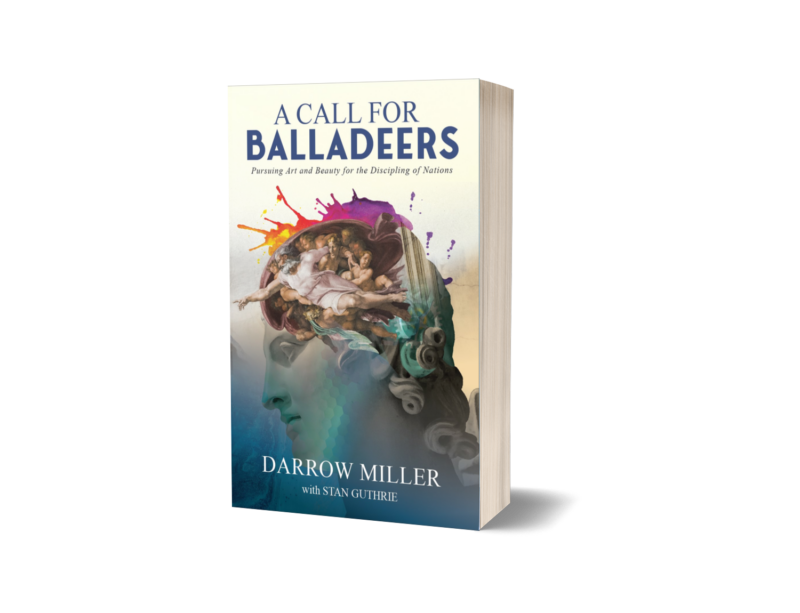
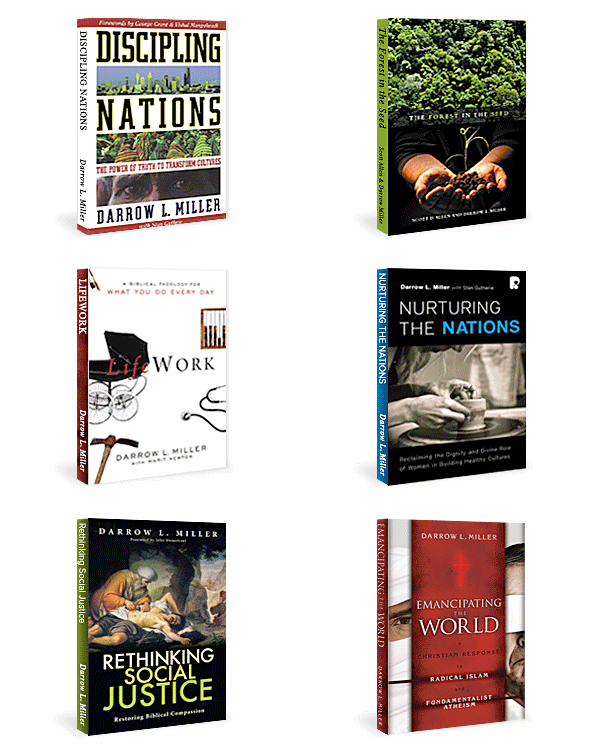
Several years ago, I spoke to a group of university students about my book Life Work. Afterward, a young Japanese woman approached me. She was a Christian studying city planning and shared a story that has stayed with me ever since.
One day, while reading Scripture, she came across passages describing God as the builder of a city. Suddenly it dawned on her that if God builds cities, then He must have something to say about city planning.
So she began reading through the entire Bible with a journal in hand, recording every principle she could find that related to the design and flourishing of cities. As she continued her university studies, she intentionally allowed God’s Word—not the prevailing theories of the day—to shape the way she thought about her profession.
Do you think her work looked different because of it?
Of course it did.
Now imagine if every believer approached his or her vocation that way.
What if mothers searched the Scriptures to understand God’s design for nurturing children and cultivating a life-giving home? What if business leaders sought God’s wisdom for stewardship, justice, honesty, and human flourishing? What if educators, artists, engineers, doctors, lawmakers, and craftsmen all asked, “What does God have to say about my work?”
We would become a wise and distinctive people, bringing God’s truth to bear on the institutions and systems that shape society.
Like Daniel, we would increasingly find ourselves at the city gates.
In Scripture, the city gates were the place where leaders gathered, justice was administered, and decisions affecting the community were made. Today, the city gates are the places where influence is exercised and culture is shaped.
Proverbs 31 tells us that the husband of the woman of valor is “known in the gates,” sitting among the elders of the land. He is respected because he participates in the life and leadership of his community.
If we desire to see our cities flourish, we need believers with a thoroughly biblical worldview serving faithfully in education, business, government, media, the arts, science, medicine, and every other sphere of society. As they bring God’s wisdom into these arenas, they become instruments for turning communities away from a culture of death and toward a culture of life, freedom, justice, and human flourishing.
For America’s 250th Anniversary
The Clapham Sect, whom we explore in the final chapter of Occupy Till I Come, understood this principle well. So did many of America’s founders. They recognized that lasting cultural transformation comes when faithful men and women steward their God-given callings with biblical conviction and long-term vision.
That same calling belongs to us today.
Action Point
Identify your primary sphere of influence. Where has God entrusted you with responsibility? Then ask yourself: What would faithful occupation look like in this sphere over the next six to twelve months?
Write down your answer. Share it with someone who will encourage you, pray for you, and hold you accountable.
This is where the journey moves from inspiration to implementation.
Next: The Blueprint: What the Clapham Sect Can Teach Us About Discipling a Nation
For the Kingdom,
Darrow Miller & Friends
 Print this page


0 Comments